

How many people are affected by sepsis each year, and why is it such a serious global health issue?
Globally, sepsis affects around 49 million people every year, and approximately 11 million die from sepsis-related complications. This represents up to 20% of all deaths worldwide. It is by no means a problem limited to the developing world. In Czechia alone, tens of thousands of people suffer from so-called “blood poisoning” each year, with thousands dying from associated complications. Sepsis is also one of the leading causes of death in intensive care units.
In many cases, infections originate directly in the hospital environment, where antibiotic treatment often contributes to the growing problem of antimicrobial resistance.
What causes sepsis, and how high is the risk for an individual if it is not diagnosed in time?
Sepsis is defined as organ dysfunction resulting from a dysregulated host response to infection by microorganisms. Most commonly, these are bacteria — four main bacterial species account for up to 60% of all cases — but sepsis can also be caused by yeasts or viruses.
Early diagnosis and rapid initiation of appropriately targeted therapy are critical. The risk increases dramatically with every hour of delay. In severe cases, each hour of delayed treatment increases the probability of death by approximately 8%.
What treatment options are currently available, and why is antibiotic resistance such a major complication?
Because the primary cause is microbial infection, treatment involves antibiotics, and in some cases antifungals or antivirals. Ideally, therapy targets the specific causative pathogen. However, if the pathogen is not precisely identified, broad-spectrum antibiotics must be administered. These are not always effective, and frequent use promotes resistance, rendering antibiotics ineffective.
Sepsis is therefore a condition where insufficiently targeted therapy endangers not only the individual patient but also other patients on the ward.
How is sepsis currently diagnosed, and what are the main strengths and weaknesses of existing approaches?
Diagnosis still relies primarily on bacterial culture, where collected blood samples are incubated in growth media to allow bacteria to proliferate before identification. This approach has two major limitations. First, the analysis can take several days — which is critical in a life-threatening condition such as sepsis. Second, in up to 50% of cases, bacteria do not grow in culture at all, meaning the causative agent is never identified, even after several days.
For many years, there has therefore been demand for molecular methods capable of reliably identifying sepsis pathogens directly from blood samples within hours, without the need for culture. Several solutions have entered the market, mostly based on detection of bacterial genetic material (DNA) using PCR or sequencing. However, none have achieved widespread adoption due to insufficient sensitivity, complex sample preparation, and the need for expensive specialized instrumentation.
What makes DIANA’s technology breakthrough, and what specific advantages does it offer?
We believe that the new PCR method developed at DIANA Biotechnologies could be the first molecular test to gain broad adoption in sepsis diagnostics. Our method meets all the criteria of an ideal sepsis test:
results within two hours; detection of up to 30 pathogens in a single test, including key antibiotic resistance genes; only 1 ml of blood required (crucial for pediatric and neonatal patients); simple operation compatible with commonly available laboratory instruments; and costs comparable to conventional culture methods.
Most importantly, early clinical testing suggests we have overcome the main limitation of previous PCR approaches — insufficient sensitivity. Our method currently outperforms both culture-based diagnostics and other molecular techniques, enabling identification of the causative pathogen even in patients where other methods have failed.
What is the principle behind DIANA’s ultrasensitive diagnostics, and what stage of development is it in?
Unfortunately, we cannot disclose detailed technical information at this stage, as it is protected know-how and part of ongoing patent applications. In simple terms, however, we have innovated and optimized every step of the PCR detection workflow, pushing the method to the theoretical limits of pathogen genetic material identification directly from blood.
Which partners are you working with on development and implementation, and what does this collaboration bring?
We are currently collaborating with three Czech hospitals: Motol University Hospital, Olomouc University Hospital, and Bulovka University Hospital. These partnerships provide clinical data that so far look very promising. We plan to expand validation to additional clinical partners in Czechia and abroad.
For hospitals, this represents an opportunity to participate in a potentially breakthrough study and to be among the first institutions to use improved sepsis diagnostics to refine patient treatment. In addition to microbiology laboratories, we are also seeking collaborations with intensive care units and other departments to validate the clinical impact of faster and more reliable pathogen identification.
In the next phase, we also aim to secure a strategic partner from among larger diagnostic companies to accelerate global market entry.
How large is the sepsis diagnostics market, and what are the estimated treatment costs per patient?
Despite current limitations, the sepsis diagnostics market in North America and Europe alone is valued at approximately USD 4.5 billion. This is small compared to treatment costs — in the United States, the cost of treating a single sepsis patient is estimated at USD 32,000.
Are there competitors in ultrasensitive sepsis diagnostics, and why have previous solutions failed?
Several molecular diagnostics promising faster and more accurate sepsis detection have entered the market in the past, but all have failed for various reasons. One example was a test from a major international diagnostics company that suffered from insufficient sensitivity and a complicated protocol. Another was the test developed by U.S. company T2 Biosystems, whose market valuation exceeded CZK 6 billion even before product launch, but which filed for bankruptcy this year due to complex instrumentation requirements and high costs that prevented routine clinical use.
Despite these failures, the field clearly represents a critical unmet clinical need and a massive commercial opportunity. Most major diagnostic companies continue to pursue a viable molecular solution for sepsis diagnostics. We hope our method will be the one that finally delivers.
What are DIANA Biotechnologies’ future plans beyond COVID-era diagnostics?
When we founded the company seven years ago as a small biotech focused on applying the DIANA technology to early drug discovery, we could not have anticipated the breadth of activities we would ultimately develop. Across all areas, we build on our strong internal R&D capabilities. In addition to high-throughput tests for respiratory diseases and potentially breakthrough sepsis diagnostics, we have developed a novel technology for identifying optimal antibodies, as well as unique engineered enzymes and proteins for research and diagnostic applications. Today, the company operates across four largely independent segments: small-molecule drug discovery, antibody development, life-science reagents, and advanced diagnostics. As is typical in biotech, development costs are substantial and timelines long. Commercial success will take time, but we believe we are on a solid path toward our goal of building DIANA Biotechnologies into a significant European biotech company.
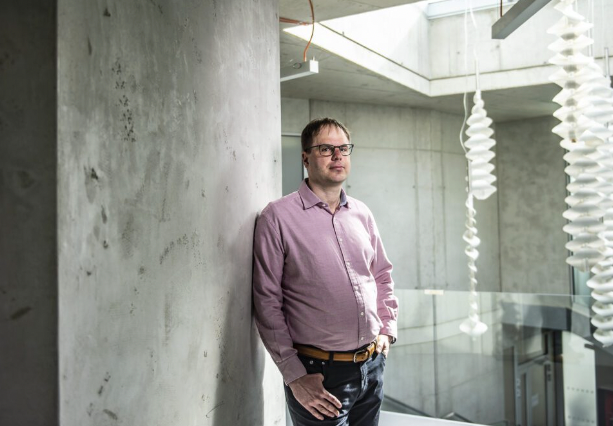
Martin Dienstbier is a co-founder and key executive at DIANA Biotechnologies, a leading Czech biotechnology company headquartered in Vestec near Prague. He studied biophysics at the Faculty of Mathematics and Physics, Charles University, and completed his PhD in molecular biology at the University of Cambridge, focusing on cellular biology and biochemistry. He later worked as a postdoctoral researcher at the University of Oxford. After returning to Czechia, he spent three years in management consulting at Boston Consulting Group (BCG), working on strategic projects for pharmaceutical and biotech clients. He applied his combined scientific and business experience to co-found DIANA Biotechnologies, where he currently serves as Chief Financial Officer.
Original text: Jaroslav Průcha, Roklen24.cz