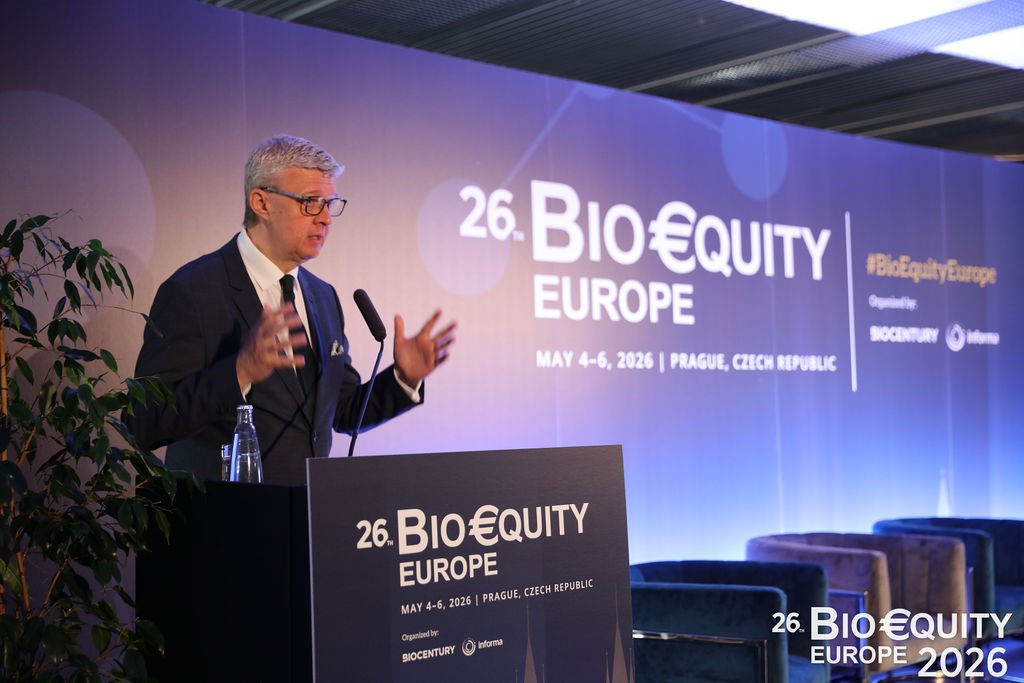
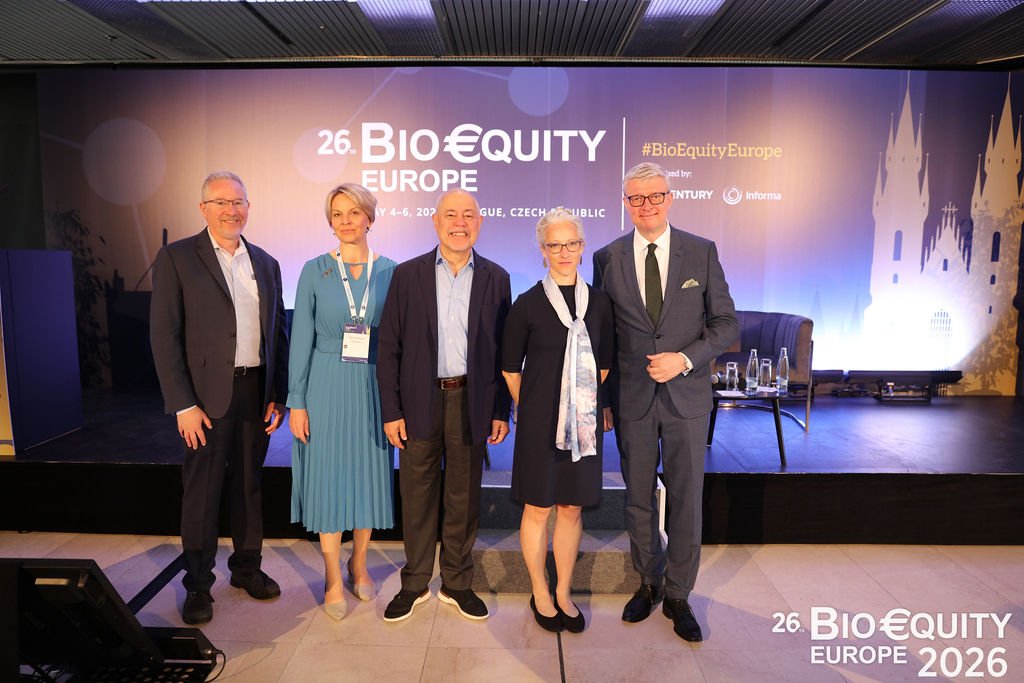
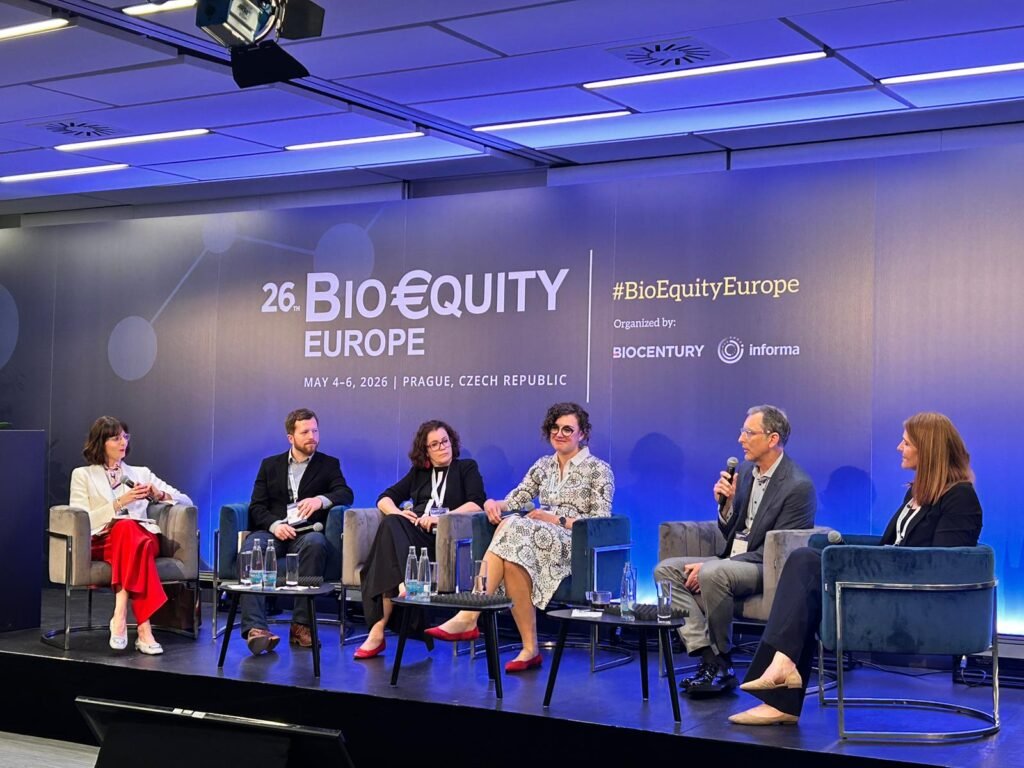
The Central European region, including the Czech Republic, is well positioned to become a major biotechnology hub in the future. Strong scientific foundations, a dynamic startup and innovation ecosystem, and current geopolitical developments all contribute to this potential. Growing investor interest in the region is reflected in venture capital and private equity investment data. At the same time, Prague is hosting BioEquity Europe 2026, Europe’s largest conference focused on investments in biotech startups. This marks the first time in the event’s 26-year history that it has been held east of Germany.
Thanks to the quality of its science, research infrastructure, and workforce, the Czech Republic is well positioned to compete with biotechnology hubs in Germany and Scandinavia. Technologies with global potential are emerging locally, but increasing the visibility of the ecosystem and creating a supportive environment for technology transfer and company formation remain essential.
“The Czech Republic has a very solid starting position in biotechnology, built on excellent science, talented people, and a growing number of innovative companies. The key challenge now is to fully capitalize on this potential, strengthen collaboration between research and business, and create an environment that attracts further investment. If we succeed, we can become one of the leading biotechnology hubs in Central Europe,” says Minister of Industry and Trade Karel Havlíček.
An analysis conducted by Prague.bio shows that the Czech biotechnology sector has significant potential. Nearly 430 organizations, including companies and research institutions, are active in the field, generating annual revenues of CZK 97.5 billion. The country also possesses substantial human capital in biotechnology and life sciences: in 2025, approximately 32,000 people were employed in these sectors. These are highly qualified professionals whose work delivers substantial added value to the economy. The student base is equally strong, with around 12,000 students enrolled in biology, biochemistry, and chemistry programs during the 2024/25 academic year. Doctoral and postdoctoral researchers are often the founders of spin-off companies, although the Czech Republic still produces relatively few spin-offs compared to other countries, not only in biotechnology.
For comparison, Bavaria—widely recognized as one of Germany’s leading technology hubs and similar in size to the Czech Republic—hosts around 540 biotechnology companies employing 57,000 people. Another prominent biotechnology cluster is the so-called Medicon Valley in the Greater Copenhagen region (Denmark/Sweden), where more than 350 biotech companies operate and the private life sciences sector employs approximately 44,000 people
“We see the hosting of BioEquity Europe 2026 as a strong endorsement of the local ecosystem. International investors, who form the core audience of the conference, clearly recognize the positive development of biotechnology in the region and want to be part of it. In their eyes, Prague and the Czech Republic have the advantage of serving as a gateway to the whole of Central and Eastern Europe,” says Jiří Fusek, Executive Director of Prague.bio.
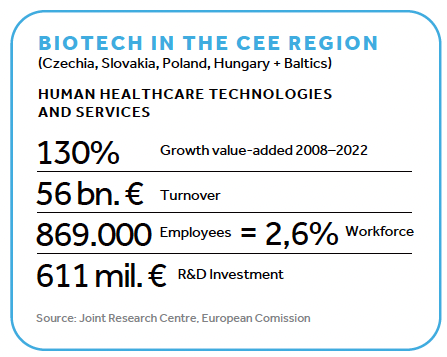
Looking at the wider Central and Eastern European and Baltic region, approximately 869,000 people work in biotechnology and health technologies, representing 2.6% of the region’s total workforce. This indicates that the sector is no longer a niche industry but has become a significant employer with a growing impact on innovation and economic transformation. Sector revenues amount to EUR 56 billion, while gross value added grew by 130% between 2008 and 2022. Biotechnology has therefore more than doubled its economic contribution to the regional economy and is growing faster than traditional industries.
“The fact that BioEquity Europe is taking place in Prague this year is a clear signal that the local biotech ecosystem has reached a certain level of maturity. Today, the region is attractive to investors not only because of its talent and scientific excellence, but also due to the growing number of companies capable of operating on a global scale. I believe the conference will help connect leading international investors with promising projects emerging from our region,” comments Radek Špíšek, CEO of SOTIO Biotech.
The startup ecosystem represents another important chapter of the region’s biotechnology story. According to Dealroom data, Central and Eastern Europe and the Baltics are home to nearly 1,600 biotech startups. At the same time, the number of venture capital and private equity investors focusing on the sector continues to grow, reaching 220 by 2025.
The data also reveal a shift in investor behavior. While the number of investment rounds has declined in recent years, the amount of capital invested remains strong. After peaking at around USD 160 million in 2022, investment volumes declined in 2023 but returned to growth in 2025, reaching approximately USD 140 million. Investors are becoming more selective, concentrating on a smaller number of more ambitious and mature projects rather than spreading capital across many smaller investments.
“The biotech startup environment in the Czech Republic, as well as in other major regional markets, has undergone significant development in recent years. We are pleased to see that investors at both regional and global levels have started responding to this progress. Given its favorable quality-to-cost ratio, biotechnology research in the region represents an attractive alternative. We are particularly encouraged by the growing number of young scientists—from both the region and abroad—who are launching startups here and choosing Central Europe as the base for their entrepreneurial projects,” concludes Milan Prášil, CEO of IOCB Tech.
Regional hosting of BioEquity Europe 2026 is sponsored by IOCB Tech, SOTIO Biotech and the City of Prague.