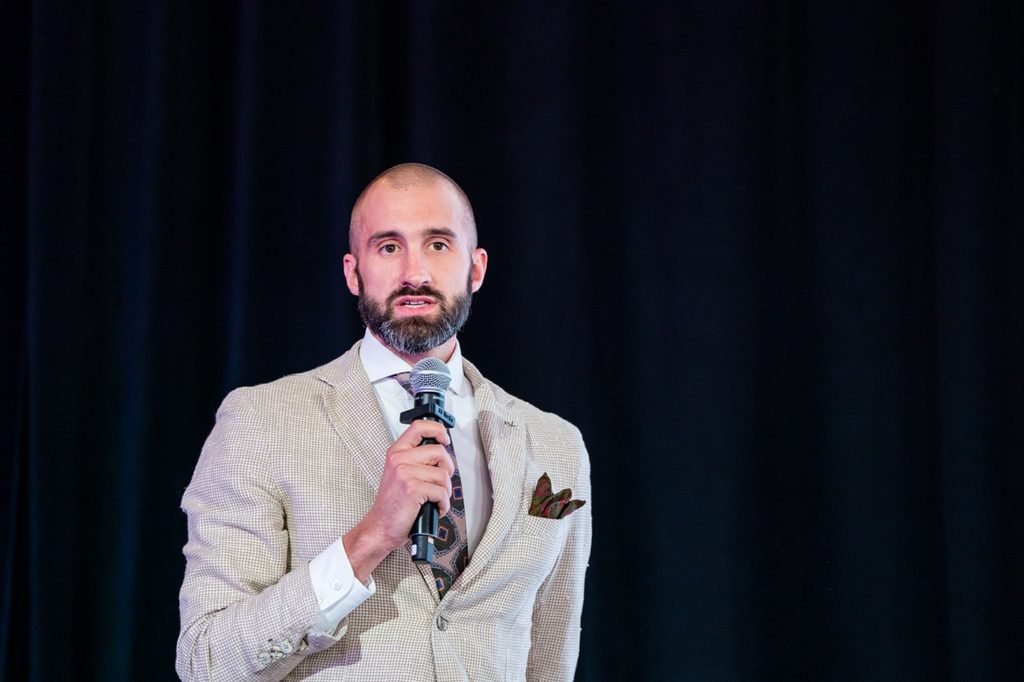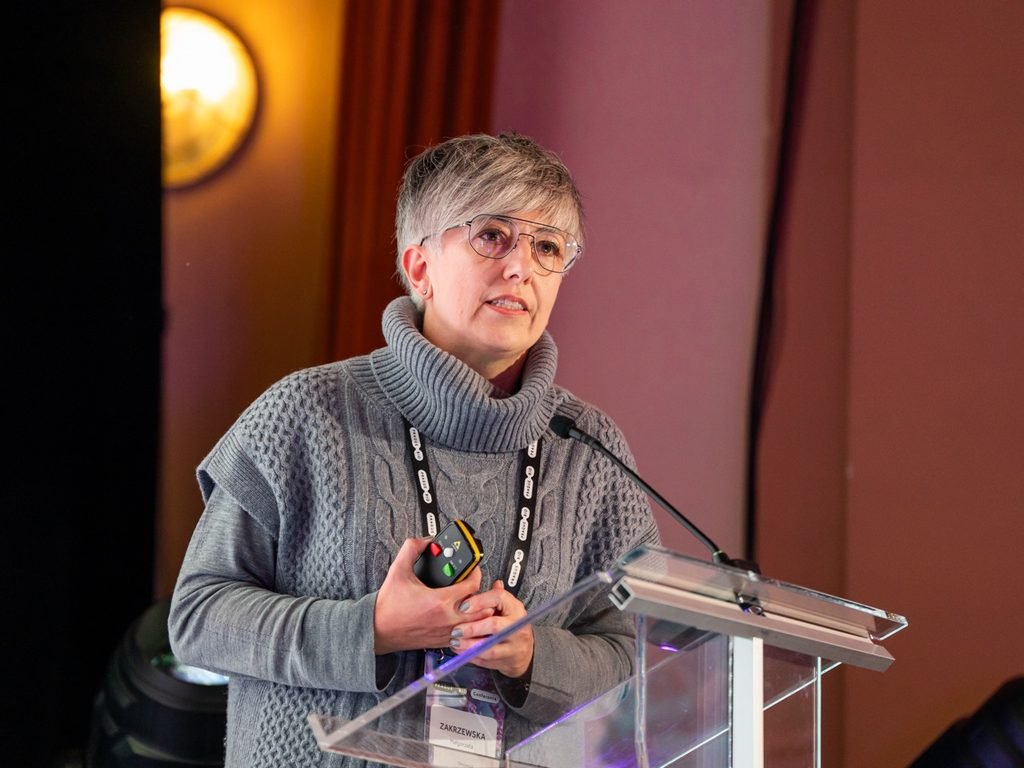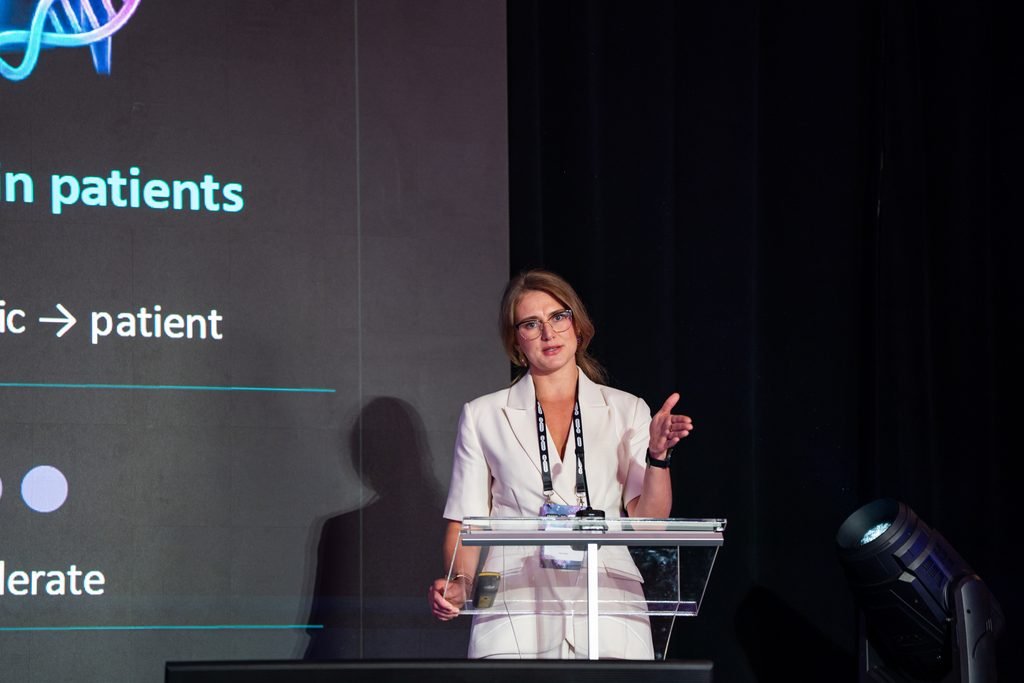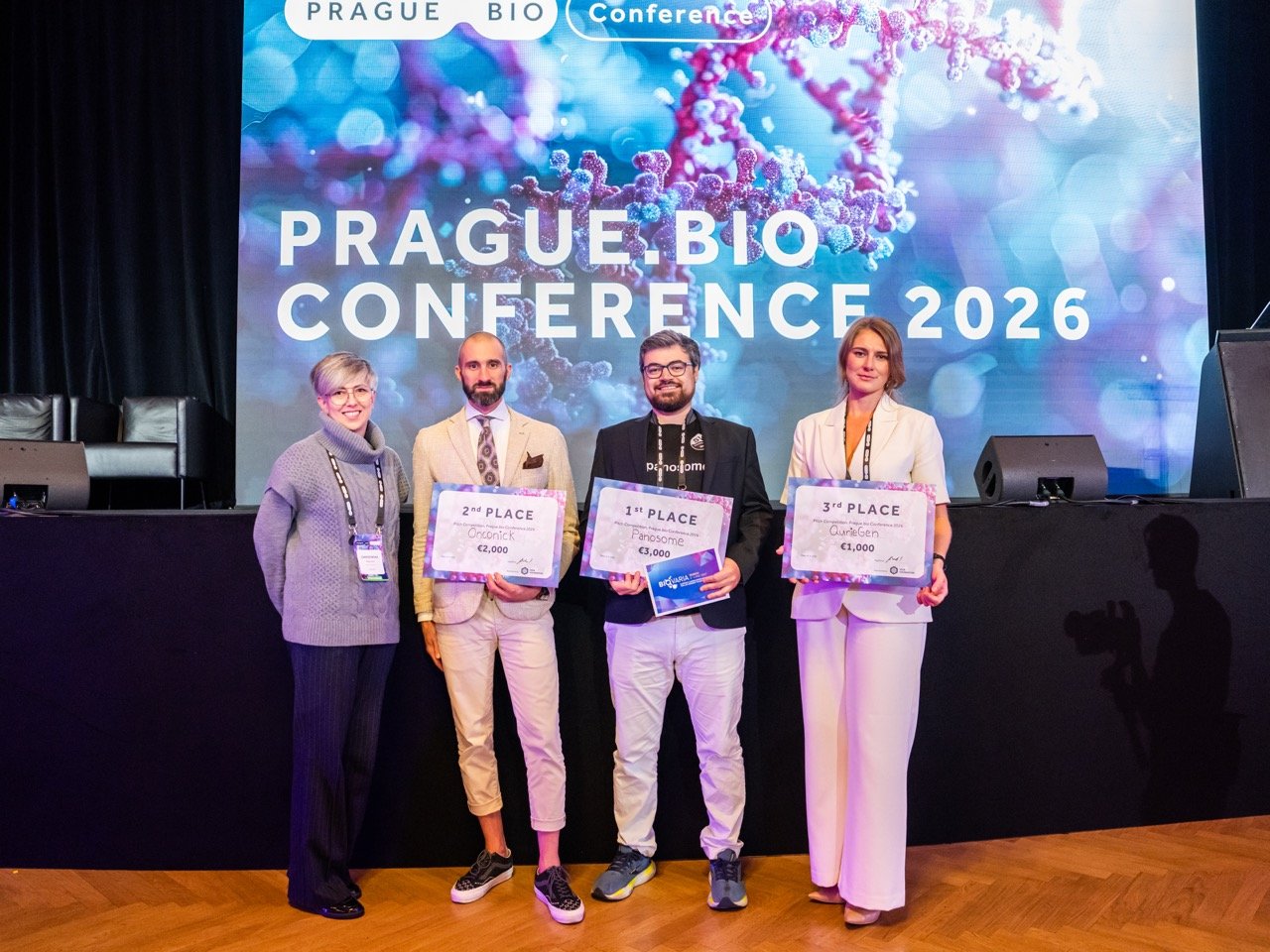
This year’s Prague.bio Conference attracted around 400 participants, including scientists, investors, representatives of biotech companies and industry professionals. The programme focused primarily on the competitiveness of Europe’s biotechnology sector, financing for innovative companies and the use of advanced technologies in drug development. Another key topic was the upcoming EU Biotech Act, which aims to improve conditions for biotechnology research and business in Europe.
The Pitch Session featured twelve selected startups and research projects from across Europe. An expert jury comprising investors and industry specialists evaluated the projects based on their technological innovation, commercial potential and opportunities for real-world application.
Nearly 40 projects applied for the Pitch Session
„This year’s Pitch Session once again demonstrated the diversity and technological sophistication of projects emerging from Europe’s biotechnology ecosystem. We saw not only new approaches to treating serious diseases, but also technologies that could fundamentally change the way new drugs are developed. The number of startups and projects applying to our competition also continues to grow every year, with nearly 40 applications received this year,“ said Jiří Fusek, Executive Director of Prague.bio.
From nearly 40 applications, the jury selected twelve finalists to present their technologies to the audience. Alongside Czech research teams, startups from Germany, Poland and other European countries also took part. Additional innovative technologies were showcased in the poster session, giving their developers an opportunity to present their projects to potential investors and industry partners.
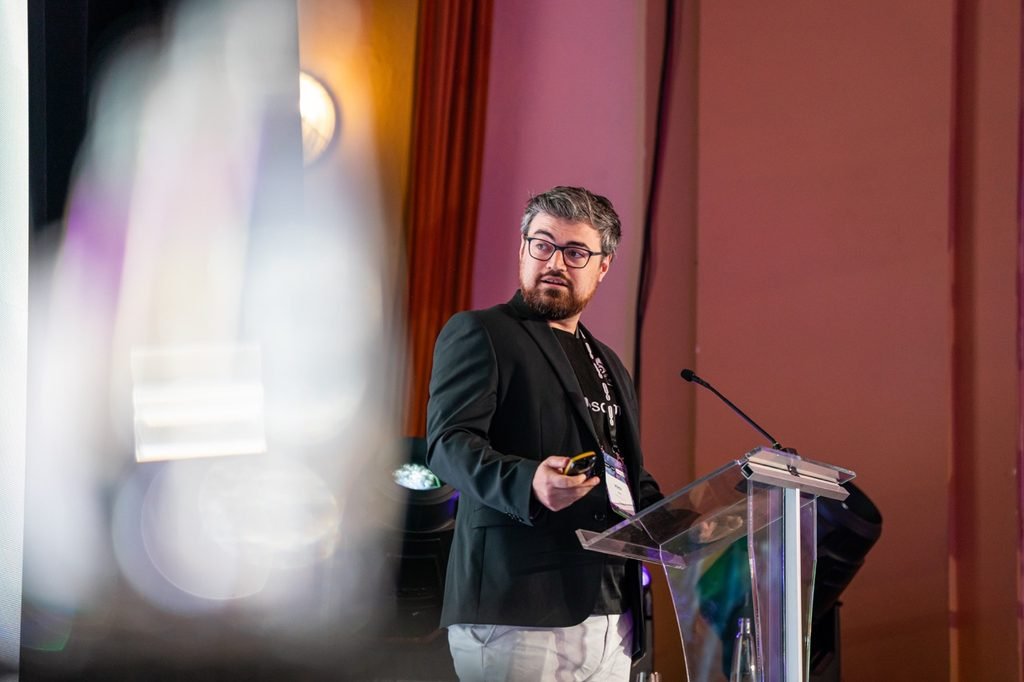
Winning startup Panosome harnesses a parasite to develop vaccines and antibodies
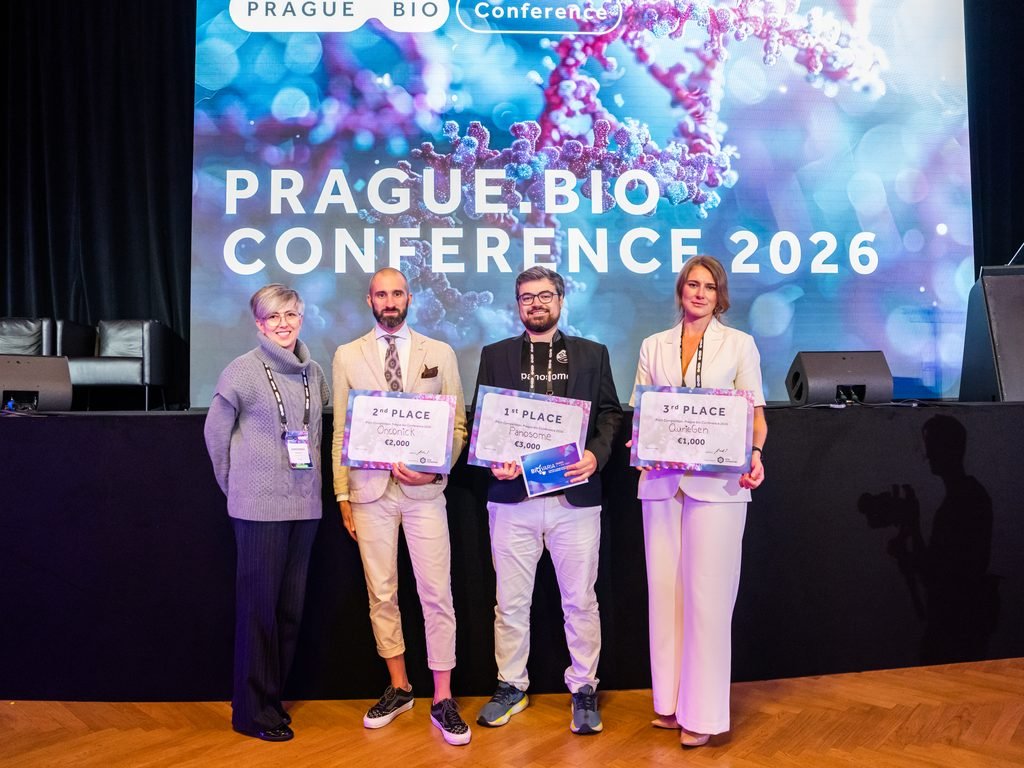
The first prize of €3,000 went to Panosome, a German startup based in Heidelberg, which is developing a novel technology platform for vaccine and antibody development. In addition to the cash prize, the startup earned an opportunity to present its project to the investment committee of United Founders VC and a ticket to the international BioVaria 2027 partnering conference.
Panosome’s technology builds on the unique biology of Trypanosoma brucei, the parasite responsible for African sleeping sickness. The parasite has an exceptionally dense layer of specific proteins on its surface, enabling it to manipulate the immune response and evade the body’s defences. Panosome’s founders decided to turn this biological feature into a tool for medical applications.
Their platform uses the parasite’s surface proteins, which can trigger a strong immune response. This makes the technology suitable not only for developing new vaccines, but also for generating monoclonal and therapeutic antibodies, as well as for diagnostic applications. A single technology platform therefore offers multiple potential applications across healthcare and the pharmaceutical industry.
The startup is currently in the preclinical development stage, focusing on validating its technology. Its ambition is to provide a new platform that could make the development of vaccines and other biological medicines more efficient.
Second place and a cash prize of €2,000 went to Polish startup Onconick, which focuses on developing a new generation of targeted cancer therapies. Its technology is based on so-called antibody-drug conjugates (ADCs).
In simple terms, these are antibodies that act as precision drug delivery systems. They recognise a specific protein called FGFR1 on the surface of target cells, bind to it and enable an anticancer drug to be delivered inside the cell. The aim is to target cancer cells as precisely as possible while limiting damage to healthy tissue, one of the major challenges associated with conventional chemotherapy.
In the future, this technology could offer new treatment options for certain solid tumours. The startup is developing antibodies designed to bind effectively to target cells and subsequently deliver therapeutic compounds. In addition to the cash prize, Onconick also received a ticket to BioVaria 2027.
Third place went to Dutch startup QurieGen, which received a cash prize of €1,000 and a ticket to the BioVaria 2027 conference. Its technology combines artificial intelligence, biological data analysis and laboratory experiments to accelerate drug discovery and make the development process more efficient. Developing a new drug is an extremely time-consuming and expensive process, with many promising compounds failing during testing. QurieGen therefore creates virtual cell models that help predict how cells will respond to different compounds or biological interventions. Its platform connects computational modelling with real-world laboratory experiments. AI-generated predictions are tested on actual cells, and the resulting data is then used to further refine the models.
QurieGen represents the rapidly growing field of TechBio, which brings together biology, data science and artificial intelligence, opening up new possibilities for pharmaceutical research.